
Y Combinator, 500 Global, Antler, Devpost
A necessary precursor to market-wide emergent innovation is the development of "standards," such as the Web Standards, with the iterations, maintenance, and governance overseen by a Standards Organization.
Terrance Tao keeps a blog about his work, detailing both successes and where he is stuck. Paul Erdos put forth challenges during his lifetime, unsolved problems in mathematics. When posting about his struggles, a random commenter said that he was working on an algorithm to solve sudoku puzzles that may help. It turned out to be the breakthrough , as their collaboration helped solve the problems. [1]
The Linux Foundation manages Linux, Git, and SLSA.
2018, Jun 16. The Day the Gauge Changed YouTube
Technology innovation is considered "emergent" because it arises from the unpredictable, bottom-up interactions of individuals, organizations, and ecosystems—often resulting in breakthroughs that established incumbents miss. This emergence favors outsiders and startups who can move faster, take greater risks, and experiment outside legacy constraints.
Key Ways Emergent Patterns Shape Technology Innovation
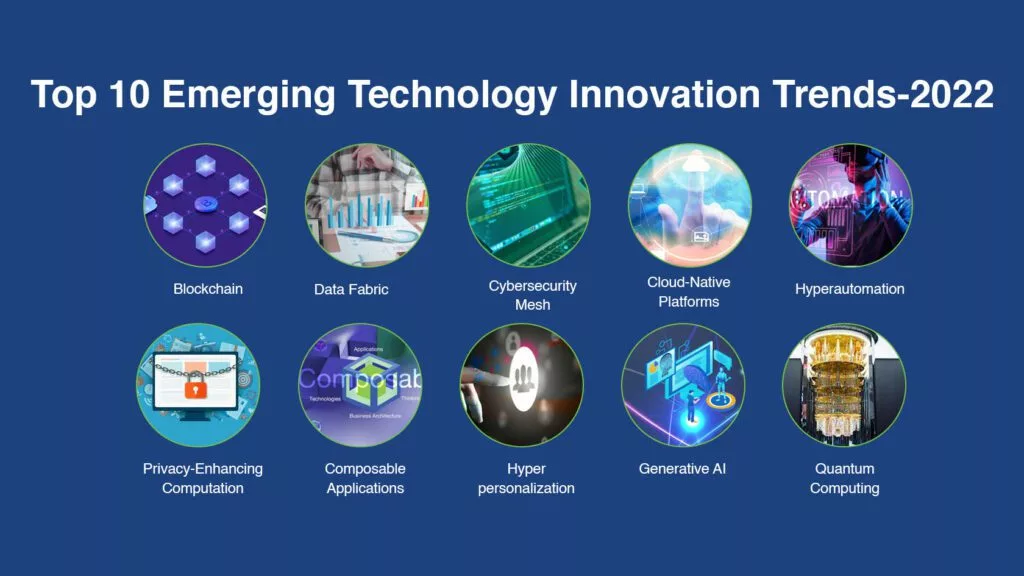
Nonlinear and Unpredictable Growth: Many transformative technologies (e.g., generative AI, quantum computing, 3D printing [2] [3]) begin with small groups or startups experimenting at the margins. These innovations often do not follow a predictable trajectory and instead gather momentum through feedback, adoption, and ecosystem effects. [4] [3]
Edge-of-Network Dynamics: Large incumbents are optimized for scale and stability, which can make them less responsive to new ideas that start at the periphery. Startups, on the other hand, thrive in these "edge" spaces where emergent opportunities arise—such as new business models or product concepts—before these are recognized as valuable by larger players. [4] [3]
Lower Barriers and Looser Structures: Startups and technology outsiders can rapidly iterate and pivot since they face fewer organizational and legacy constraints. They benefit from emergent, open-source ecosystems and crowd-sourced knowledge, which accelerates innovation outside formal R&D labs. [3]
Ecosystem Formation: As certain technologies (like AI, quantum, or edge computing) demonstrate potential, new ecosystems and value networks emerge—often built around startups and small firms that specialize and interconnect rapidly, outpacing slower-moving corporations. [4] [3]
Why Startups and Outsiders Often Win
| Factor | Startups/Outsiders | Incumbents/Established Firms |
|---|---|---|
| Speed of Experimentation | High—can try and discard ideas quickly | Low—processes tend to be slower |
| Risk Appetite | High—bet company on new tech | Low—protect existing revenue streams |
| Bureaucracy/Legacy | Minimal/none | Heavy—layers and committees |
| Ecosystem Engagement | Networked—collaborate with other disruptors | Focus on own internal R&D |
| Path Dependency | Unencumbered by past investments | Bound by historical choices |

A diagram could illustrate how small nodes (startups and outsiders) within a technology ecosystem interact dynamically and accelerate growth at the network’s edges, whereas incumbents cluster at the center, slower to adapt.
Practical Example — Generative AI & Agentic AI
Recent advancements in generative AI and "agentic AI" (AI that can autonomously plan and execute workflows) exemplify emergence: Startups leveraging foundation models (like GPTs) quickly deployed novel applications, while larger enterprises were still evaluating use cases. [4] [2]
The surge in application-specific semiconductors arose in response to startups' demand for AI hardware, spawning new entrants and ecosystems—before incumbents fully recognized the opportunity. [4]
An example visualization could show how a startup leverages open-source AI tools to rapidly build a new product, gathering a user base and ecosystem before larger companies react.
Supporting Observations
Technology is often industry-agnostic at first, but finds traction in niche applications through outsider experimentation before achieving mainstream impact. [4] [3]
Venture capital and government funding frequently support these emergent paths, as they look for asymmetric returns not found in established players. [3]
National and regional competition can accelerate this pattern, as countries invest in emerging sectors to spur local startup ecosystems, further bypassing slow-moving incumbents. [4]

Supporting visuals may include timelines of how technology like 3D printing or AI saw early growth among startups and small teams before moving to large-scale adoption in heavy and process industries. [3]
Summary Insight
Technology innovation is "emergent" because it is shaped by decentralized, adaptive processes—often catalyzed by outsiders and startups best positioned to exploit new tools, business models, and changing networks before large organizations can respond. [4] [2] [3]
Citations
[4]: 2025, Jun 25. [PDF] Top 10 Emerging Technologies of 2025 | World Economic Forum. Published: 2025-06-25
[5]: 2025, Sep 23. The new Essential Eight technology trends: PwC. Published: 2023-11-15 | Updated: 2025-09-23
[6]: 2024, Sep 25. [PDF] Global Trends in Innovation Patterns: A Complexity Approach. Published: 2024-09-01 | Updated: 2024-09-25
[7]: 2025, Sep 22. Emerging technologies - Wikipedia. Published: 2006-01-30 | Updated: 2025-09-22
[8]: 2025, Feb 13. [PDF] The Stanford Emerging Technology Review 2025. Updated: 2025-02-13
[9]: 2025, Feb 24. Emerging technologies | OECD. Published: 2025-02-03 | Updated: 2025-02-24