GitHub has fundamentally transformed the software development landscape by accelerating development cycles, fostering a culture of open-source collaboration, and democratizing access to tools and knowledge. Its impact is evident in both quantitative and qualitative metrics, as well as in how it has shaped the ethos of software engineering globally.
Key Ways GitHub Has Changed the World
1. Streamlining Software Development
GitHub provides a centralized platform for version control, collaboration, and project management, making software development faster and more efficient.
Version Control with Git Integration: By integrating Git, a distributed version control system, GitHub allows developers to track changes, roll back to previous versions, and collaborate seamlessly.
Continuous Integration and Deployment (CI/CD): GitHub Actions (introduced in 2019) has enabled automation of workflows, reducing manual overhead and speeding up the development cycle.
Pull Requests and Code Reviews: GitHub popularized features like pull requests, which streamline the process of proposing, discussing, and integrating code changes, ensuring higher code quality.
Traction Data:
As of 2023, 100 million developers use GitHub, up from 28 million in 2018, reflecting its widespread adoption.
Over 372 million repositories are hosted on GitHub, a testament to its role in global software development.
2. Creating an Open-Source Collaboration Ethos
GitHub has catalyzed the growth of the open-source movement by providing a platform where developers can share, contribute to, and reuse code.
Accessibility and Community: GitHub has made it easy for anyone to contribute to open-source projects, breaking down barriers to entry.
Popular Open-Source Projects: Projects like Linux, React, TensorFlow, and Kubernetes thrive on GitHub, powered by millions of contributors worldwide.
Knowledge Sharing: GitHub’s README files, wikis, and issue trackers have made it a hub for documenting and sharing software knowledge.
Traction Data:
GitHub's "State of the Octoverse 2022" report highlighted that 94 million developers contributed to open-source projects that year.
In 2022, 3.5 billion contributions (commits, pull requests, etc.) were made, showing the platform’s scale as a collaboration tool.
3. Accelerating Innovation
GitHub has reduced the time and effort required to bring new technologies to market by enabling developers to build on existing work rather than starting from scratch.
Code Reusability: Developers can fork repositories, clone projects, and use libraries or frameworks hosted on GitHub, significantly reducing development time.
Rapid Prototyping: GitHub makes it easy to experiment and iterate on ideas, promoting agile methodologies.
Open-Source Foundations for Startups: Many startups and tech giants, including Netflix, Airbnb, and Uber, have leveraged open-source technologies hosted on GitHub to build their core products.
Traction Data:
GitHub reports that 90% of companies use open-source software in some capacity, much of which is hosted on GitHub.
Over 20,000 open-source projects are actively maintained by Fortune 500 companies on GitHub.
4. Democratizing Software Development
GitHub has lowered the barrier to entry for learning to code and participating in software development by providing free tools, educational resources, and a vibrant community.
Free Access to Tools: GitHub offers free repositories, enabling anyone to start coding without financial constraints.
GitHub Education: Programs like GitHub Student Developer Pack provide free access to premium tools and resources for students.
Global Participation: Developers from around the world, including those in traditionally underrepresented regions, can now contribute to global projects.
Traction Data:
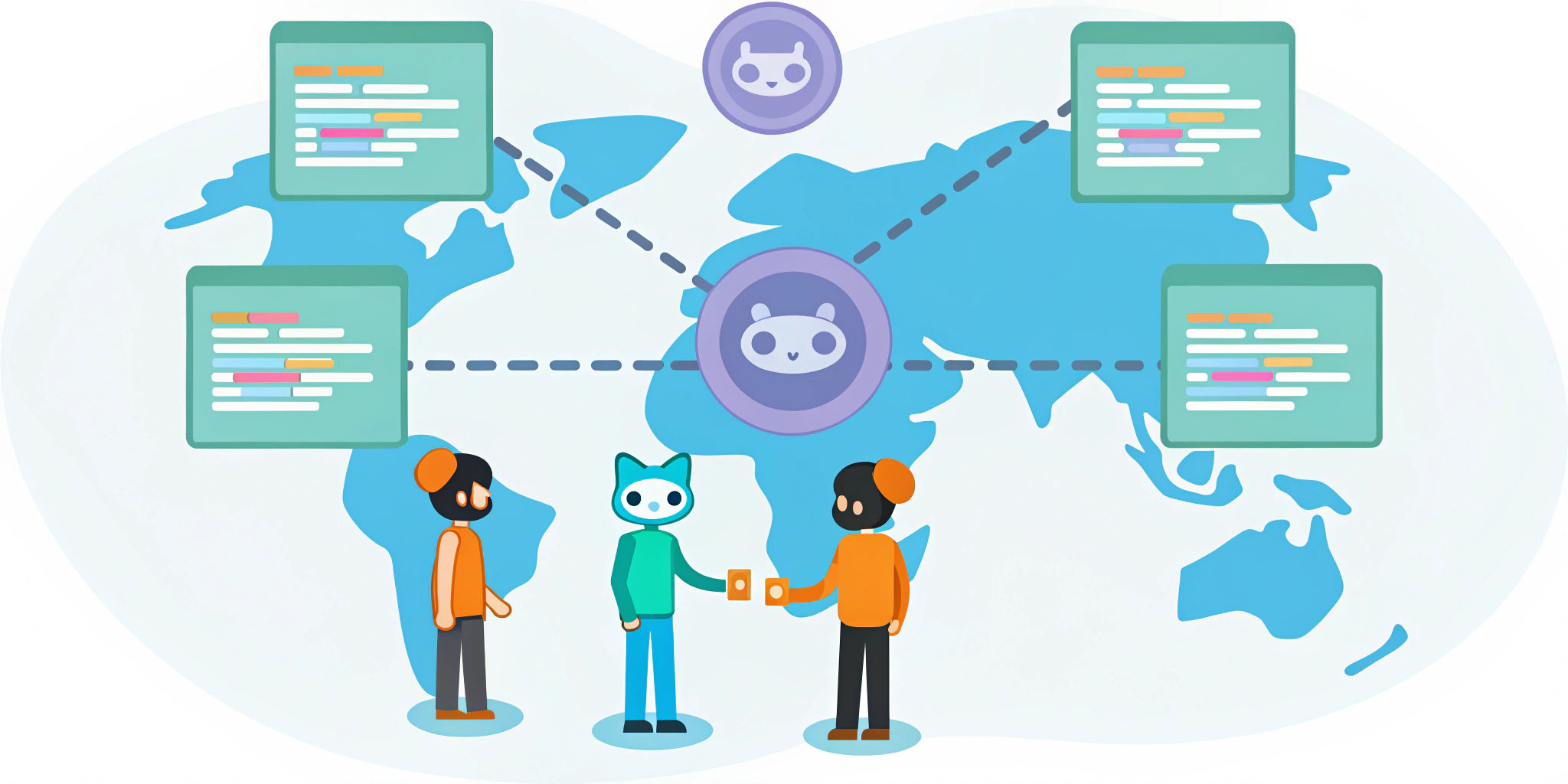
GitHub is used in over 200 countries, with significant growth in regions like Africa and Asia.
40% of GitHub’s users are now outside the US, reflecting its global reach.
5. Fostering Corporate and Community Collaboration
GitHub bridges the gap between corporate development and the open-source community, creating a hybrid model of innovation.
Corporate Open Source: Companies like Microsoft, Google, and Facebook actively contribute to open-source projects on GitHub, benefiting from community contributions while advancing their own goals.
Cross-Disciplinary Collaboration: GitHub’s platform is now used beyond software, including in fields like data science, education, and even creative industries.
Traction Data:
Microsoft’s acquisition of GitHub in 2018 for $7.5 billion underscored its strategic importance.
Corporate repositories on GitHub have grown rapidly, with over 10,000 organizations using GitHub Enterprise.
Examples of GitHub’s Impact
React (Meta): React, hosted on GitHub, has over 210,000 stars and is used by millions of developers to build web applications.
Linux Kernel: The Linux kernel repository on GitHub has attracted contributions from thousands of developers, making it one of the most significant open-source projects in history.
COVID-19 Research: During the pandemic, GitHub became a hub for sharing data, models, and software to combat COVID-19, accelerating global research efforts.
Conclusion
GitHub has redefined software development by fostering a collaborative, open, and innovative ecosystem. With its vast user base, growing repository count, and integration into every facet of the tech industry, GitHub has become the backbone of modern software engineering. Its role in accelerating development, enabling open-source collaboration, and democratizing access ensures its continued influence on the global tech landscape.
 Source: