
Holacracy is an idealistic, conceptual system for management that emphasizes flat, flexible organizations. In searching for examples of Holacracy, mixed results are quite public. So, a hard and pure implementation
Management Theory of Holacracy
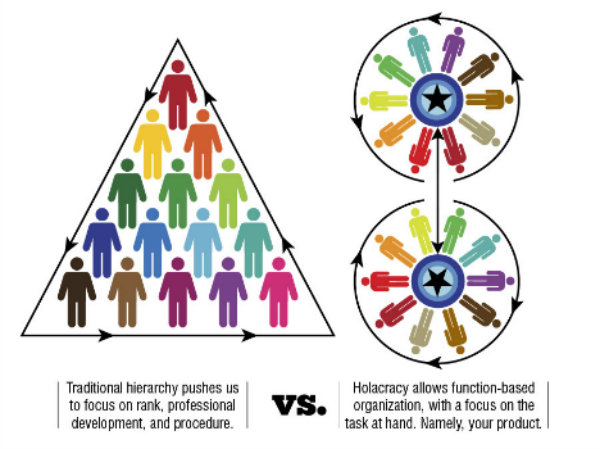
Holacracy is a management theory and organizational structure designed to distribute authority and decision-making throughout an organization, rather than relying on a traditional hierarchical structure. It emphasizes self-organization, transparency, and distributed control, with roles rather than job titles defining responsibilities and accountabilities[1][2]. The framework is codified in the Holacracy Constitution, which outlines the organizational structure and rules of cooperation[3][4].
**
Key Components of Holacracy
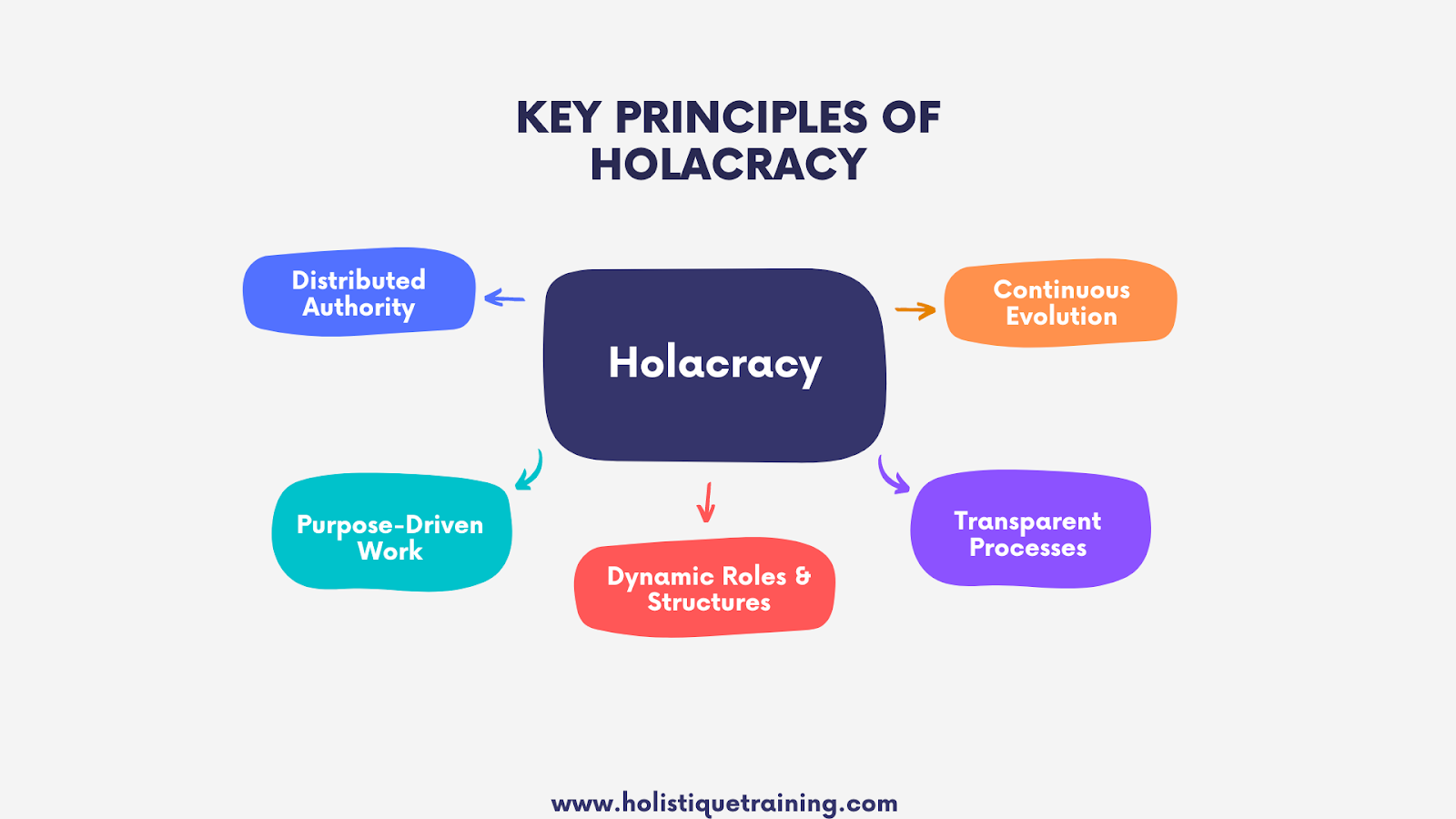
Roles and Circles: Roles are defined by a purpose, domains (exclusive authority), and accountabilities. These roles are organized into circles, which are semi-autonomous teams focused on specific functions or projects[2][5].
Governance Process: Regular governance meetings allow teams to update roles and clarify expectations, ensuring flexibility and adaptation to changing circumstances[4][5].
Self-Management: Employees are empowered to propose changes, and decision-making is distributed across roles, not just management[5].
Public Failures
While Holacracy has been successful in some organizations, public failures or challenges have been noted. For example:
Zappos: The company faced challenges implementing Holacracy fully, resulting in high turnover rates and difficulty in adapting to the new structure.
Medium: The company adopted some principles of Holacracy but later reverted to a more traditional structure citing difficulties in scaling with the system.
Informing a Reorganization Using Holacracy Principles for Digital Transformation and AI
To inform a reorganization around digital transformation and AI without adopting 100% of Holacracy concepts, consider the following:
Adaptation and Flexibility: Implement a flexible organizational structure that can quickly adapt to technological changes. This can be achieved by creating fluid roles that evolve with business needs, similar to Holacracy's role-centric approach[1][5].
Distributed Decision-Making: Encourage distributed decision-making to empower teams closer to the data and technology. This can improve responsiveness to digital transformation needs[2][5].
Transparency and Communication: Emphasize transparency in role expectations and communication to reduce information silos and facilitate collaboration across departments during digital transformation[3][1].
Continuous Governance: Regularly review and update organizational roles and structures to ensure alignment with digital transformation goals. This can be done through periodic governance meetings akin to those in Holacracy[2][4].
Hybrid Approach: Integrate elements of Holacracy with traditional structures to create a hybrid model that suits your organization's specific needs and culture. This might involve adopting circles for certain projects while maintaining a more traditional hierarchy where necessary[5].
.png)
By selecting and adapting these elements, organizations can leverage the benefits of Holacracy while addressing potential challenges and fitting the needs of digital transformation and AI integration.
Citations
[6]: 2025, Jul 30. Holacracy® – The Operating System for Self-Management. Published: 2025-06-16 | Updated: 2025-07-30
[7]: 2025, Sep 17. Holacracy, a modern form of organizational governance predictors .... Published: 2023-01-19 | Updated: 2025-09-17